
Richardson Resident Lookup Records
Richardson crosses the Dallas and Collin county line, so the first task is to identify the county connected to the address or case. That choice determines the appraisal district, county clerk, court route, and many copy requests. A property record can tie a name to an ownership interest, mailing address, legal description, and deed reference. It does not establish who is currently present at the site. A voter lookup may show registration and polling context, while a docket or vital record answers a very different question. Use each record for the fact it was designed to preserve.
| Record | What It Confirms | Where | Access |
|---|---|---|---|
| CAD parcel or tax record | Assessed owner, legal description, situs and mailing fields | Dallas CAD or Collin CAD, selected by county | Public search; fields differ by district |
| Recorded deed | A recorded ownership interest and instrument date | Dallas County Official Records or Collin Deed Search | Online index with copy channels that vary |
| Voter registration | Registration status and permitted address or precinct context | Texas My Voter Portal and county registrar | Individual lookup; protected fields withheld |
| Court index | Public case filing, parties, and available disposition context | Dallas or Collin clerks, or Richardson Municipal Court | Online and clerk-request routes |
| Vital event | A marriage, divorce, birth, or death event under access rules | County clerk, district clerk, or Texas DSHS | Newer copies are eligibility-limited |
| Business or license filing | A legal filing role or license status at a stated time | Texas SOSDirect or the relevant state board | Portal-specific search and copy rules |
Start with the applicable CAD record when an address is known. Begin with the voter portal or court party search when a name and date of birth are available. The county line matters even on a single Richardson street, and a mailing address that differs from the situs should be treated as a correspondence field until another official record supports it.
Richardson Voter Lookup Checks
Texas My Voter Portal is built for an individual lookup, not a browse of everyone at an address. The portal uses a first and last name, date of birth, ZIP code, and county selection. For Richardson, select Dallas or Collin based on the registration record. A match can return registration status, registered name, permitted residence information, VUID, precinct, district, and polling details. It does not reveal ballot choices, and a no-match can result from spelling, county, date-of-birth, address-change, or list-maintenance differences.
The portal image below shows the official form captured for the Richardson resident lookup route. Use the full name and county as entered, then compare a result with a second independent record rather than combining people who merely share a surname.
Texas My Voter Portal is the source of this captured lookup form.
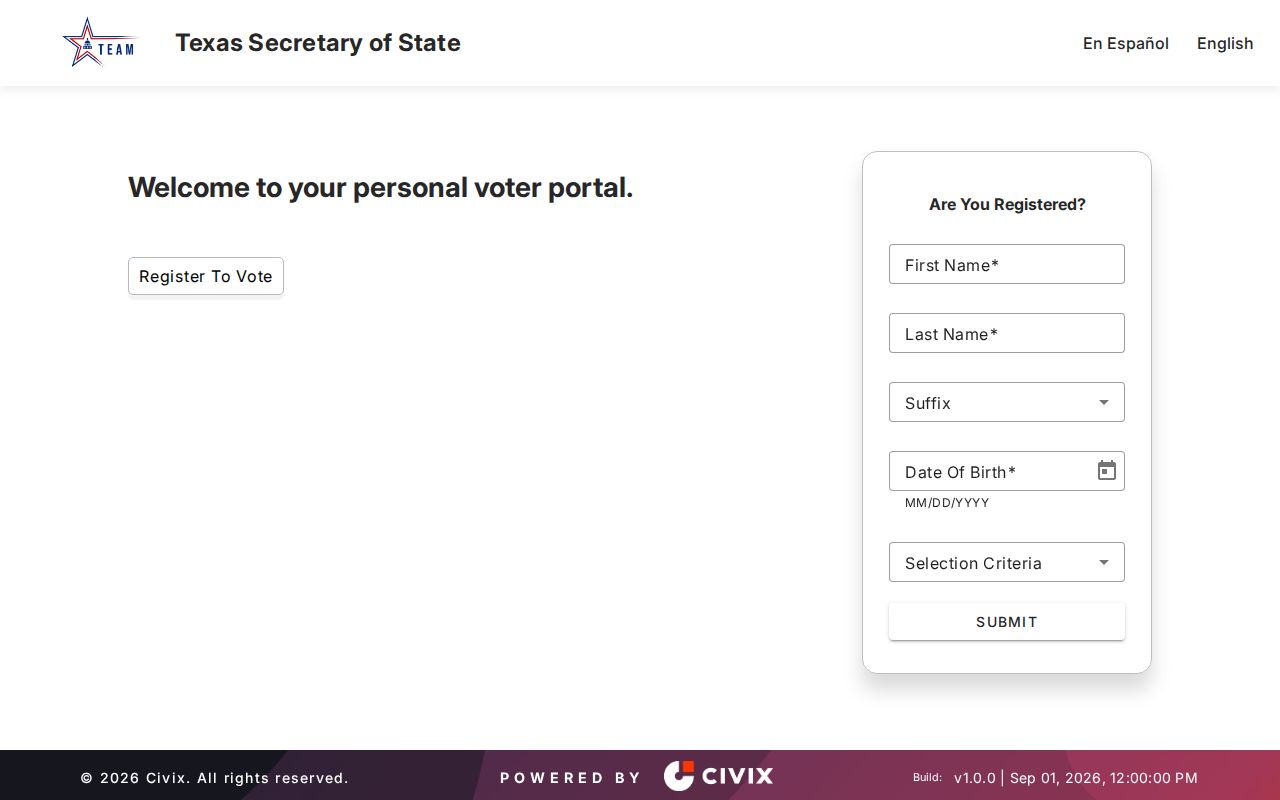
The name, birth-date, ZIP, and county inputs are useful for separating similar Richardson names, but the resulting registration entry is still not a household census.
| Portal field | Use in a careful search |
|---|---|
| Name | Enter the first and last name; retain the spelling returned by the portal. |
| Date of birth | Use the individual’s date of birth to distinguish same-name records. |
| ZIP code | Use the ZIP associated with the registration, not as a city-limit test. |
| County | Select Dallas or Collin for the correct Richardson jurisdiction. |
Texas election rules make some voter information public while keeping Social Security, driver-license, personal-ID, and protected-address information confidential. A full voter-file request follows a separate Texas SOS form, affidavit, fee, and use restrictions. It is not a substitute for the individual portal.
Richardson Resident Lookup Court Results
For a court question, use the Dallas County record-search routes for Dallas-side matters and the Collin district-clerk route for Collin-side matters. Richardson Municipal Court supplies docket and request routes for city matters, but its instructions do not state a complete public name index or a coverage date. Texas courts also cautions that there is no single portal covering every trial court. A public case index can show that a matching name appears in a case, not that two similar names identify the same person.
Dallas County’s official record-search page is the source of the captured court-routing screen.
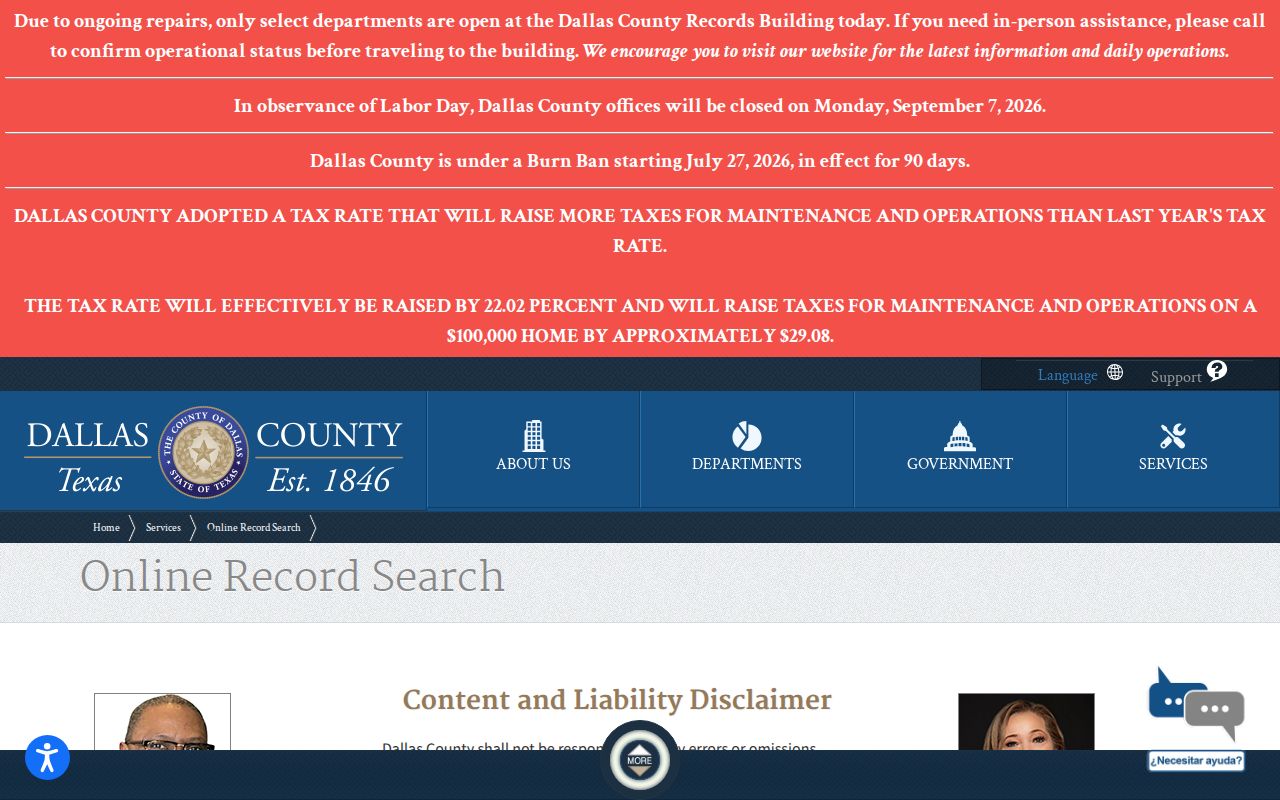
The county screen routes users to civil, criminal, probate, and related clerk systems, so the case type and county should be settled before drawing a conclusion from a name result.
A typical accessible Dallas or Collin docket result can show the following inventory. Sealed, juvenile, adoption, expunged, and protected-victim matters are not ordinary public results. Older Dallas civil and criminal information can lead to clerk or Central Records channels; Collin identifies older civil and criminal requests through its record-request process.
| Result field | What it can show |
|---|---|
| Party names | Plaintiff, petitioner, defendant, or respondent as indexed by the clerk. |
| Case number | The clerk-assigned identifier for locating the file. |
| Filing or open date | When the case entered the clerk’s system. |
| Case type and assignment | The civil, criminal, probate, family, court, or division context when public. |
| Event history | Public filings, settings, orders, judgments, or other docket events. |
| Document links | Available public documents, purchased copies, or a restricted-entry notice. |
| Status or disposition | Available case outcome context, which requires careful reading. |
- Docket
- A court’s dated list of filings, settings, orders, and other events in one case.
- Index and image
- An index points to a record by fields such as name or case number. An image is the scanned document itself and may be restricted, purchased, or available only from the clerk.
- Certified copy
- A copy issued by the record custodian with its certification. It is different from a researcher’s notes or an unverified screen result.
Note: A filing is not a conclusion about a person, and a clerk can confirm file access without certifying a researcher’s identity judgment.
Richardson Vital Record Routes
Birth, death, marriage, and divorce records do not share one access rule. County clerks issue local certified records within their roles, the district clerk holds a divorce decree from its court, and Texas DSHS Vital Statistics provides statewide birth and death records plus marriage and divorce verifications. Texas Government Code §552.115 makes birth records public on the 75th anniversary and death records public on the 25th anniversary. Current certified copies remain limited to eligible requesters.
DSHS materials state that marriage verifications cover 1966 to the present and divorce verifications cover 1968 to the present. A state verification is not the certified marriage license or certified divorce decree, which remain with the issuing county clerk or court clerk. When an event is older, the Richardson Public Library’s genealogy resources, newspapers, cemetery material, and dated directories can provide family-history context, but they do not replace a certified record.
For the wider court-routing context, Texas Courts’ search guidance explains why a local clerk may be the needed route.
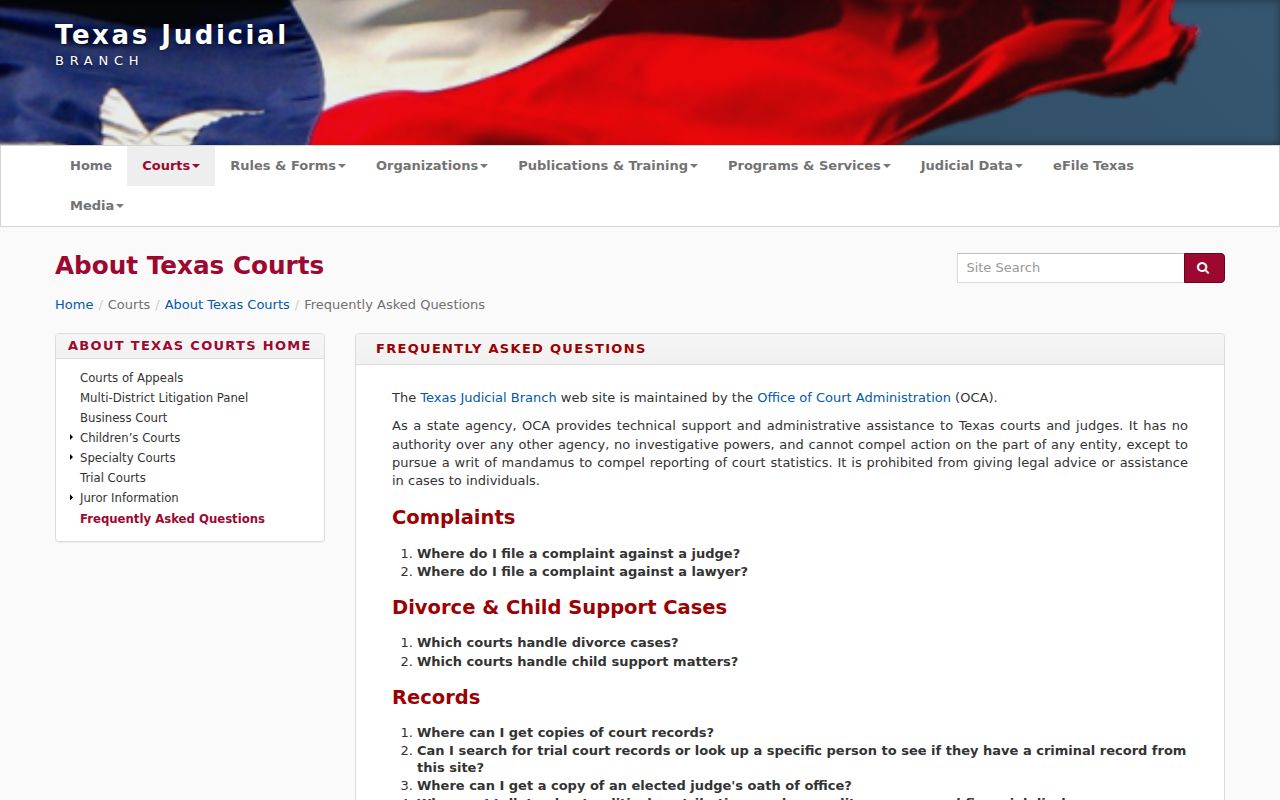
The state guidance supports a practical rule for a Richardson resident lookup: identify the court and county first, then use the clerk system or re:SearchTX participation route that actually holds the record.
Verify a Richardson Resident
Verification works best when every step answers one narrow question. For a name tied to a known address, begin with the correct CAD record and copy the parcel or legal description. Check whether the public record names an owner, a trustee, an estate, or another legal party. Then check a voter or court result only with enough details to distinguish the person. A deed establishes a recorded transaction, not current presence, and an inactive voter entry does not necessarily show a move.
- Identify the Dallas or Collin county route from the parcel, court, or registration context.
- Search the exact name and sensible variants, including initials, middle names, spacing changes, and maiden or married forms where supported by a record.
- Match two independent fields, such as county and date of birth, or legal description and recording date. Do not merge results on a name alone.
- Read the record type and disposition before taking notes. Keep its record number, date, and custodian.
- Request a copy from the county clerk, court clerk, or DSHS only when the access rule permits it and the record is needed.
When the question changes from one person to the people along an address, the separate Richardson street directory follows the address-keyed parcel and deed trail rather than repeating this name-first process.
Richardson Family History Trails
Probate, old newspapers, yearbooks, and directories can help reconnect a family branch or a former classmate without presenting an old listing as current proof. An heir search begins with a probate case index and estate documents, then may connect through a death notice, recorded deed transfer, or legal description. A probate file can be sealed or may contain restricted material. The public record can show an administrator, beneficiary, or grantee, but it should not be used to fill gaps by assumption.
For a former classmate, use Richardson yearbooks, library local-history material, newspapers, alumni archives, and historical directory entries. The Richardson Public Library offers local-history databases and the UNT Portal to Texas History has digitized regional directory pages. Those sources establish a dated connection to an address or school-era record. They do not demonstrate current status. The historical-volume detail belongs in the Richardson Directory Book.
Richardson Record Request Fallbacks
When a needed city or county record is not online, request an existing record through the Texas Public Information Act. Send the written request to the Richardson City Secretary, the relevant county office, or the governmental body that holds the record. Give a date range, street or parcel, document or case number if known, department, delivery preference, and willingness to receive a lawful cost estimate. The Act provides a route to existing governmental records, not a demand that an office create a list or release protected information.
Texas Government Code Chapter 552 requires prompt production or a permitted response, and its request and cost provisions guide the custodian’s reply. If a record appears wrong, use the original custodian’s correction path: the CAD for appraisal information, the registrar for voter status, the clerk for an index or file issue, DSHS for a vital correction, or the Secretary of State for an entity filing. Preserve the record number and describe the precise error.
Note: A commercial people-search category can be stale or merged, so important Richardson facts should be verified with the official custodian.
Richardson Resident Lookup Limits
Texas law and custodian rules protect far more than a search screen may reveal. Voter systems withhold Social Security, driver-license, personal-ID, and protected-address information. The Texas Address Confidentiality Program lets qualifying people use a substitute address, and other protected classes can have information withheld under specific statutes. Motor-vehicle personal data is restricted. Utility and delivery data are not public resident lists. Birth, adoption, juvenile, sealed, expunged, and protected-victim records also have their own limits.
The Texas Data Privacy and Security Act does not automatically erase a county deed, CAD parcel, court docket, voter record, or vital record. A correction, redaction, or confidentiality request belongs with the original custodian and its governing rule. Recorded images can include sensitive data, so retain only what is needed for the lawful question and never republish identifiers or protected details.
Lawful use. Use a Richardson resident lookup for personal records research, family history, civic transparency, or reconnecting. Texas Penal Code §42.074 prohibits harmful online disclosure of a residence address or telephone number, and records must never be used to stalk, harass, or intimidate anyone.